
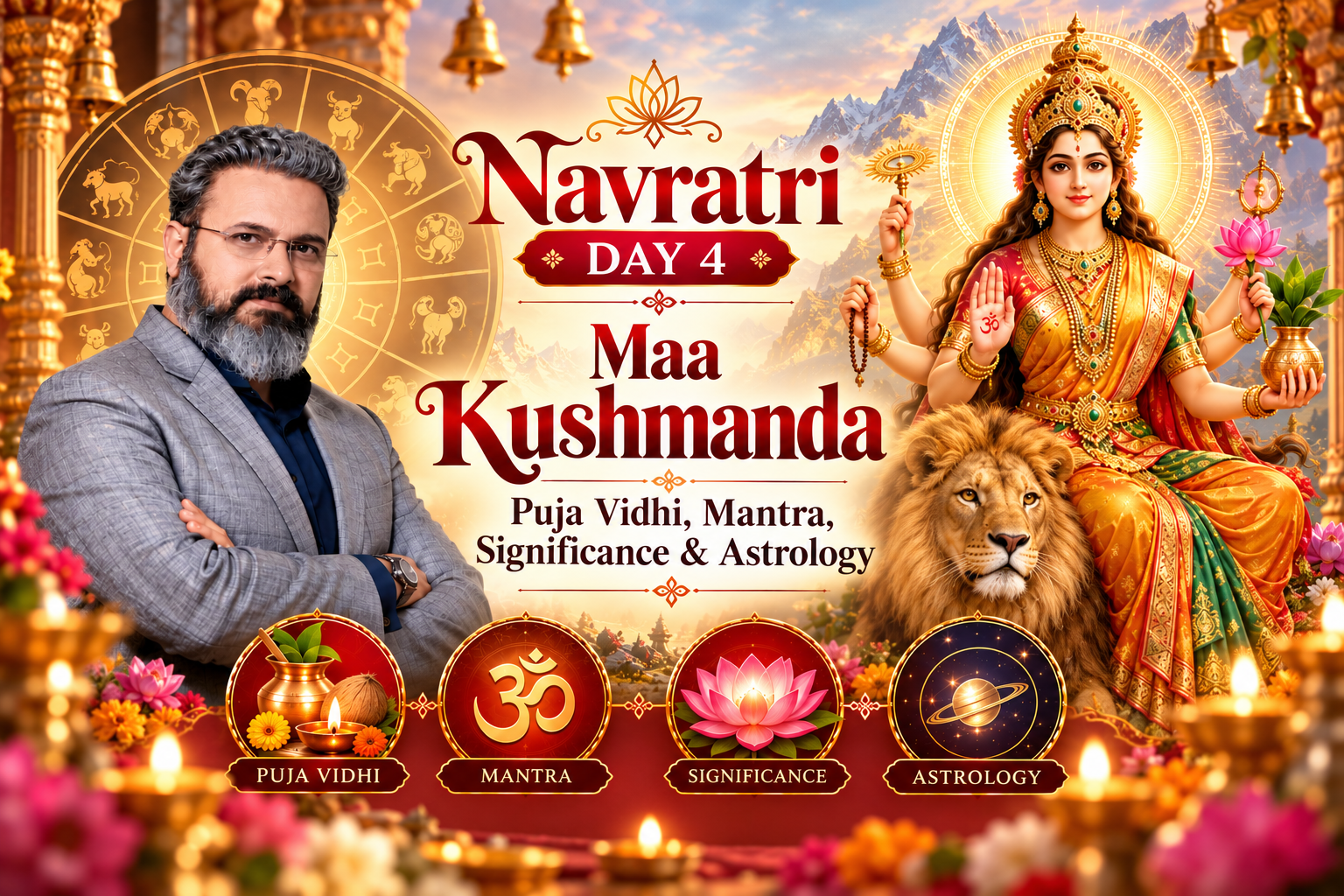
Navratri Day 4 Maa Kushmanda: Puja Vidhi, Mantra, Benefits & Astrology Explained by Guru Ji Dr Raj
Nine Nights. Nine Goddesses. Nine Divine Secrets! Discover Navratri’s spiritual wisdom, karmic significance and astrological insights with Guru Ji Dr. Raj, PhD in Astrology, National Award winner and renowned Singapore astrologer. With 31+ years of experience, he presents an exclusive nine-day Navratri series on raj.guru, guiding devotees towards spiritual transformation.
Navratri Day 4 Maa Kushmanda celebrates the fourth divine form of Goddess Durga. After worshipping Maa Shailputri, Maa Brahmacharini and Maa Chandraghanta, devotees honour Maa Kushmanda on the Fourth Day of Navratri.
Maa Kushmanda is revered as the divine mother of cosmic creation. According to Hindu tradition, she brought light and life into the universe through her radiant smile. Her divine form represents positive energy, creativity, vitality and the power of new beginnings.
The name Kushmanda is traditionally interpreted through three Sanskrit elements: Ku (little), Ushma (warmth or energy) and Anda (cosmicegg). This symbolic interpretation connects the Goddess with the creation of the universe.
During Navratri Day 4, devotees seek her blessings for spiritual strength, positivity, wisdom and wellbeing.
In this guide, we explore Maa Kushmanda Puja, Kushmanda Mantra, Maa Kushmanda Significance , her divine story, spiritual teachings and the astrological significance of Maa Kushmanda.
Who Is Maa Kushmanda?
Maa Kushmanda is the fourth manifestation among the Nine Forms of Maa Durga, collectively known as Navadurga.
She is also known as Ashtabhuja Devi, meaning the Goddess with eight arms.
In traditional depictions, Maa Kushmanda rides a lion and carries sacred objects, including a lotus, bow, arrow, kamandalu, rosary, nectar-filled vessel, discus and mace.
Her radiant appearance represents the energy of creation and the divine light that removes darkness.
The lion symbolises courage and strength, while her eight arms represent her divine powers.
The deeper Maa Kushmanda Significance lies in understanding that positive energy, creativity and inner strength can help individuals move beyond dark nessand uncertainty.
The Divine Story of Maa Kushmanda
According to popular Hindu devotional tradition, before t he creation of the universe, there was darkness.
There was no light, no life and no visible creation.
It is believed that Maa Kushmanda appeared and created the cosmicegg through her gentle divine smile.
From this cosmic beginning, the universe gradually came into existence.
Her radiant energy is traditionally associated with the Sun, the source of light and vitality.
Because of this association, Maa Kushmanda is often described as the Goddess whose divine radiance illuminates the universe.
This story is a symbolic account of cosmic creation within Hindu religious tradition.
The spiritual lesson is meaningful: even the smallest positive beginning can lead to extraordinary transformation.
This is one of the central teachings of Navratri Day 4 Maa Kushmanda.
Why Is Maa Kushmanda Worshipped on Navratri Day 4?
The spiritual journey of Navratri progresses through nine divine forms of Goddess Durga.
Each form represents different qualities that devotees can cultivate in their lives.
On Day 1, Maa Shailputri represents stability and strong foundations.
On Day 2, Maa Brahmacharini represents discipline and devotion.
On Day 3, Maa Chandraghanta represents courage and inner peace.
On Day 4, Maa Kushmanda represents creativity, vitality and positive transformation.
The Fourth Day of Navratri encourages devotees to recognise the importance of positive thinking, purposeful action and spiritual awareness .
Maa Kushmanda teaches that meaningful transformation begins when we replace fear and negativity with hope, determination and constructive effort.
Spiritual Meaning of Maa Kushmanda
The spiritual significance of Maa Kushmanda is closely associated with creation, positivity, inner light and vitality.
Her divine story teaches four importants piritual lessons.
Positive Energy: Develop a constructive mindset even during challenging circumstances.
Creativity: Recognise your ability to create meaningful changes in life.
Inner Strength: Build determination and confidence through spiritual discipline.
New Beginnings: Understand that transformation can begin with one positive decision.
These teachings make Navratri Day 4 Maa Kushmanda especially meaningful for individuals seeking motivation, clarit y and personal growth.
Her divine smile reminds devotees that even a small beginning can become the foundation of something greater.
Maa Kushmanda and the Anahata Chakra
In some interpretations of the Navadurga spiritual journey, Maa Kushmanda is associated with the Anahata Chakra, also known as the Heart Chakra.
The Anahata Chakra is traditionally linked with compassion, emotional balance, kindness and the ability to develop harmonious relationships.
This spiritual association complements the qualities represented by Maa Kushmanda.
Her radiant smile symbolises the power of positive intentions, while the Heart Chakra represents openness, compassion and emotional awareness.
During Navratri Day 4, devotees may reflect on how their thoughts, emotions and actions influence the people around them.
The deeper l esson is that positive transforma tion becomes more meaningful when it is guided by kindness and compassion.
Maa Kushmanda Puja Vidhi
Devotees can perform Maa Kushmanda Puja on the fourth day of Navratri with sincerity and devotion.
A simple traditional worship sequence may include:
Wake up early, bathe and wear clean clothes.
Clean and prepare the puja area.
Place an image or representation of Maa Kushmanda in the worship space.
Light a diya and incense.
Offer flowers, fruits and other traditional offerings according to family customs.
Recite the Kushmanda Mantra with concentration.
Spend a few moments in meditation or silent prayer.
Perform aarti and pray for wisdom, vitality and spiritual growth.
In some traditions, devotees offer pumpkin or preparations made from pumpkin, reflecting the Goddess’s association with Kushmanda.
The exact Maa Kushmanda Puja Vidhi for Navratri Day 4 may vary according to regional and family customs.
Devotion, sincerity and peaceful intention remain central to worship.
Maa Kushmanda Mantra
A commonly recited Kushmanda Mantra is:
ॐ देवी कूष्माण्डायै नमः॥
Om Devi Kushman dayai Namah॥
Devotees chant this mantra during Navratri Day 4 Maa Kushmanda worship to honour the Goddess and seek her blessings.
Another traditional prayer associated with Maa Kushmanda is:
सुरासम्पूर्णकलशं र ुधिराप्लुतमेव च।
दधाना हस्तपद्माभ्यां कूष्माण्डा शुभदास्तु मे॥
This prayer praises Maa Kushmanda and seeks her auspicious blessings.
Mantra chanting can also serve as a meditative practice that encourages concentration, calmness and spiritual awareness.
Maa Kushmanda Mantra and Benefits
The spiritual practice of chanting the Maa Kushmanda Mantr a is traditionally associated with cultivating qualities such as:
Positive thinking and optimism
Spiritual strength
Confidence and determination
Inner peace
Devotion and concentration
Creativity and motivation
Emotional balance
Hope during difficult circumstances
The Maa Kushmanda Mantra Benefits are understood within devotional tradition rather than as guaranteed physical, financial or personal outcomes.
The deeper purpose of mantra practice is to strengthen f aith, awareness and spiritual discipline.
Maa Kushmanda and Astrology
The astrological significance of Maa Kushmanda provides another perspective on the fourth day of Navratri.
In some Navadurga astrological traditions, Maa Kushmanda is associated with the Sun, also known as Surya.
In Vedic astrology, the Sun represents the soul, authority, confidence, vitality, leadership and personal identity.
This association reflects Maa Kushmanda’s connection with cosmic light and radiant energy.
Just as the Sun illuminates the world, Maa Kushmanda symbolically represents the light of awareness that removes ignorance and negativity.
From this perspective, Kushmanda Astrology encourages individuals to develop confidence, respon sibility and clarity in their actions.
However, planetary associations with Navadurga can vary across traditions and should not be treated as universal astrological rules.
Maa Kushmanda and the Sun in Vedic Astrology
The Sun holds an important position in Vedic Astrology.
It is traditionally associated with self-confidence, authority, leadership, vitality, responsibility and one’s sense of purpose.
Its interpretation in an individual’s birth chart depends on planetary placement, house ownership, aspects and other astrological factors.
The symbolic connection between Maa Kushmanda and the Sun in Vedic Astrology highlights the importance of inner confidence and purposeful action.
During Navratri D ay 4, devotees may reflect on questions such as:
Am I using my abilities with confidence and responsibility?
Do I allow fear or negativity to limit my potential?
Am I creating positive changes through my daily actions?
Do I balance personal ambition with kindness and compassion?
These questions help transform Navratri into a period of spiritual reflection and personal development.
For in dividual astrological concerns, the complete birth chart should be considered rather than relying on general planetary associations.
What Does Maa Kushmanda Teach Us About Modern Life?
Modern life often brings uncertainty, stress, competition and constant pressure to achieve results.
People may experience challenges in their careers, relationships, finances or personal development.
Maa Kushmanda teaches that transformation begins with a positive intention followed by meaningful action.
Her divine story reminds devotees that creation begins with possibility.
In professional life, this can mean developing new ideas and taking responsibility for personal growth.
In relationships, it can mean creating a more supportive and compassionate environment.
In personal development, it can mean replacing self-doubt with determination and consistent effort.
The message of Navratri Day 4 Maa Kushmanda is especially relevant today because meaningful progress requires both positive thinking and practical action.
How to Follow Maa Kushmanda’s Teachings During Navratri
The teachings of Maa Kushmanda can be incorporated into everyday life through simple spiritual practices.
During the Fourth Day of Navratri, consider focusing on the following actions:
Begin your morning with gratitude and prayer.
Practise meditation or mindful breathing.
Replace unnecessary negative thoughts with constructive actions.
Start one meaningful project or personal improvement.
Offer kindness and encouragement to others.
Spend time reflecting on your strengths and abilities.
Maintain discipline in your daily routine.
Develop patience while working toward long-term goals.
These practices reflect the deeper meaning of Maa Kushmanda Puja—cultivating positive energy, creativity and spiritual awareness.
Navratri Day 4 : The Power of Creation and Positive Energy
Navratri Day 4 Maa Kushmanda represents an important stage in the nine-day spiritual journey.
After developing stability through Maa Shailputri, discipline through Maa Brahmacharini and courage through Maa Chandraghanta, devotees are encouraged to cultivate creativity and positive transformation through Maa Kushmanda.
Her divine form reminds us that even the smallest positive action can become the beginning of meaningful change.
Through Maa Kushmanda Puja, mantra chanting, meditation and self-reflection, devotees can use the fourth day of Navratri to strengthen their confidence, determination and spiritual awareness.
Frequently Asked Questions:
- Which Goddess is worshipped on Navratri Day 4?
Maa Kushmanda is worshipped on the Fourth Day of Navratri. She is the fourth form of Navadurga and represents cosmic creation, positive energy, vitality and spiritual strength.
- What is the Maa Kushmanda Mantra?
A commonly recited Kushmanda Mantra is “Om Devi Kushmandayai Namah.” Devotees chant it during Navratri Day 4 Maa Kushmanda worship.
- What is the significance of Maa Kushmanda?
Maa Kushmanda’s significance is associated with cosmic creation, positive energy, inner light and vitality. According to Hindu devotional tradition, she created the cosmic egg through her divine smile.
4. Which planet is associated with Maa Kushmanda?
In some Navadurga astrological traditions, Maa Kushmanda is associated with the Sun or Surya. In Kushmanda Astrology, this connection symbolically represents confidence, leadership, vitality, and inner strength.
- What are the benefits of worshipping Maa Kushmanda?
Maa Kus hmanda Puja and mantra chanting are traditionally associated with cultivating positivity, confidence, spiritual strength, concentration, and inner peace.
Conclusion
The fourth day of Navratri celebrates the divine qualities of creativity, positivity and spiritual transformation.
Navratri Day 4 Maa Kushmanda reminds us that meaningful change often begins with a positive intention and the courage to take action.
Through Maa Kushmanda Puja, the Kushmanda Mantra, meditation and spiritual reflection, devotees can develop greater confidence, determination, and inner awareness.
Her teachings encourage us to replace negativity with hope, use our abilities responsibly and bring positivity into our everyday lives.
May Maa Kushmanda bless devotees with wisdom, strength, positivity and spiritual growth throughout the sacred journey of Navratri.
Guru Ji Dr Raj – Mystic Guru | Vedic Astrologer
For deeper insights into Vedic Astrology, spirituality, Navratri and traditional wisdom, explore more guidance from Guru Ji Dr Raj at raj.guru