Dussehra 2026 Date, Vijayadashami shubh muhurat, Significance, Story & Vedic Astrology
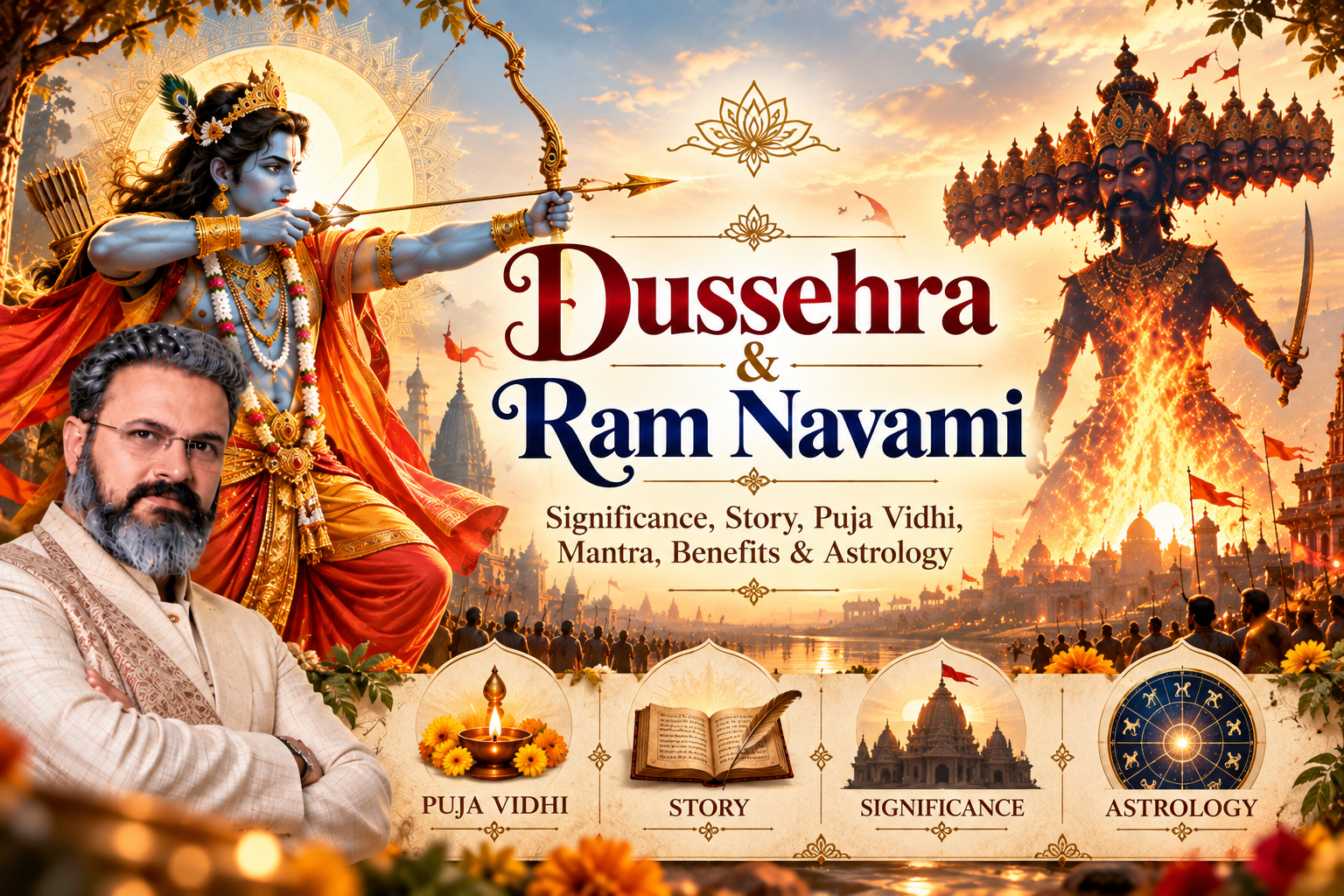
Dussehra 2026, also known as Vija yadashami 2026 , celebrates the victory of good over evil, truth over arrogance, and righteousness over injustice. One of the most important Hindu festivals, Dussehra commemorates Lord Rama’s victory over Ravana and, in many traditions, Maa Durga’s triumph over Mahishasura.
But Dussehra is not just about defeating an enemy. It is about defeating the anger, ego, greed, and negative habits within ourselves.
Every year, millions of devotees celebrate this sacred festival through prayers, Ramlila performances , Ravan Dahan, and traditional rituals. From India to Singapore, the UK, USA, and other countries, Dussehra continues to connect Hindu communities with the teachings of Sanatan Dharma.
In this guide , explore the Dussehra 2026 date, its mythological stories, Vijay adashami Puja Vidhi, spiritual significance, and traditional connections with Vedic Astrology.
Dussehra 2026 Date and Festival Details
Dussehra 2026 falls on Tuesday, 20 October 2026, according to commonly used Indian festival calendars.
The festival is observed on Ashwin Shukla Dashami, the tenth lunar day of the bright fortnight in the Hindu calendar.
Festival Details: Information
Festival Name: Dussehra / Vijayadashami
Dussehra 2026 Date: Tuesday, 20 October 2026
Hindu Tithi: Ashwin Shukla Dashami
Main Deities: Lord Rama and Maa Durga
Main Traditions: Ravan Dahan, Shami Puja, Ayudha Puja
Spiritual Meaning: Victory of Dharma over Adharma
Auspicious Observance: Vijay Muhurat, according to local Panchang
Important: Exact Vijayadashami puja timings vary by city and local Panchang. Devotees should ver ify the app ropriat e muh urat f or their location.
Why Is Dussehra Celebrated?
The Dussehra festival represents the victory of dharma over adharma.
Two major Hindu traditions are associated with this celebration.
The first commemorates Lord Rama’s victory over Ravana, the powerful king of Lanka . The second celebrates Maa Durga’s victory over Mahishasura, who threatened cosmic harmony.
Both stories share a powerful message: knowledge, strength, and authority become meaningful only when guided by wisdom and righteousness.
Dussehra encourages devotees to examine their own behaviour.
Are we controlled by anger? Does pride influence our decisions?
Are we using our abilities responsibly?
These questions make the festival relevant even today.
The Story of Dussehra: Lord Rama and Ravana
According to the Ramayana, Ravana abducted Mata Sita and took her to Lanka.
Lord Ram a, accompanied by Lakshmana, Hanuman, and the Vanara army, travelled to rescue her.
Ravana was a learned scholar, powerful ruler, and devoted worshipper of Lord Shiva. Yet his intelligence and strength could not protect him from the consequences of arrogance.
Despite opport unities to return Mata Sita, Ravana refused.
A great battle followed between the forces of Lord Rama and Ravana.
Ultimately, Lord Rama defeated Ravana, restoring the principles of righteousness.
The Dussehra story of Lord Rama and Ravana teaches that power without humility can lead to destruction.
Why Is Ravana Burned on Dussehra?
During Ravan Dahan, large effigies of Ravana are burned to symbolize the destruction of evil tendencies.
Ravana’s ten he ads are often in terpreted as representing negative human qualities.
Negative Quality: Positive Quality to Develop
Ego: Humility
Anger: Patience
Greed: Generosity
Jealousy: Contentment
Hatred: Compassion
Attachment: Balance
Fear: Courage
Selfishness: Service
Uncontrolled Desire: Self-Discipline
Pride: Wisdom
These are popular symbolic interpretations, not a universally fixed scriptural list.
The message is simple: true victory begins when we overcome our own weaknesses.
Maa Durga and the Spiritual Meaning of Vijayadashami
Dussehr a is also a ssociated with the victory of Maa Durga over Mahishasura.
According to the Devi Mahatmya, Mahishasura gained tremendous power and disturbed cosmic balance.
The divine energies of the gods manifested as Maa Durga, who fought the demon and ultimately defeated him.
Her victory represents the triumph of divine Shakti over destructive forces.
The nine nights of Navratri prepare devotees for this spiritual celebration through prayer, fasting, meditation, and worship.
Vijayadasham i marks the culmination of this journey.
The festival reminds us that courage and spiritual strength must be supported by patience, wisdom, and discipline.
Spiritual Significance of Dussehra
The spiritual significance of Dussehra goes beyond rituals and celebrations.
It teaches five important principles.
- Victory Over Ego
Ravana possessed knowledge and power, but arrogance influenced his decisions. Dussehra reminds us to practise humility.
- Courage to Follow Dharma
Lord Rama represent s commitment to duty and right eous conduct, even during difficult circumstances.
- Control Over Negative Emotions
Anger, jealousy, and greed can damage relationships and disturb mental peace. Self-awareness helps us manage these emotions.
- Respect for Divine Shakti
Maa Durga represents courage, protection, and the divine feminine power that restores harmony.
- Positive New Beginnings
Vijaya Dashami is traditionally considered auspicious for education, learning, and constructive activities.
These teachings encourage personal transformation rather than simply celebrating an external victory.
Dussehra Puja Vidhi: How to Perform Puja at Home
The Dussehra Puja Vidhi varies across regions and family traditions. A simple home worship practice can be performed with devotion.
Step 1
Puja Ritual: Clean the puja area
Significance: Purity and preparation
Step 2
Puja Ritual: Place Lord Rama or Maa Durga’s image
Significance: Devotional focus
Step 3
Puja Ritual: Light a diya and incense
Significance: Prayer and reverence
Step 4
Puja Ritual: Offer flowers, fruits, and sweets
Significance: Gratitude
Step 5
Puja Ritual: Chant sacred mantras
Significance: Concentration and devotion
Step 6
Puja Ritual: Perform aarti
Significance: Expression of faith
Step 7
Puja Ritual: Distribute prasad
Significance: Sharing blessings
Step 8
Puja Ritual: Practise charity
Significance: Compassion and service
Dussehra Mantras
Devotees may chant the following traditional mantras.
Lord Rama Mantra:
ॐ श्री रामाय नमः॥
Ma a Durga Mantra:
ॐ दुं दुर्गायै नमः॥
Chant with a calm mind and sincere devotion.
Specific practices such as Shami Puja and Aparajita Puja may require additional rituals according to family customs.
Important Dussehra Rituals and Traditions
Several traditional observances make Vijayadashami celebrations spiritually meaningful.
Shami Puja: The Shami tree is associated with courage and victory. The Mahabharata connects it with the Pandavas, who concealed their weapons during their period of disguise.
Ayudha Puja: Tools, books, instruments, and equipment are worshipped as an expression of gratitude. In some regions, this obser vance takes place on Navami.
Vidyarambham: In parts of South India, children begin their educational journey on Vijayadashami.
Ram lila: Dramatic performances of the Ramayana preserve the teachings of Lord Rama and culminate in Ravan Dahan.
These customs demonstrate how spiritual principles become part of everyday life.
Dussehra in Vedic Astrology
In Vedic astrology, festivals are connected with the Hindu lunar calendar, seasonal cycles, and traditional muhurta calculations.
Vijayadashami falls on Dashami Tithi during the bright fortnight of Ashwin.
The day is widely regarded as auspicious for certain new beginnings, particularly education and constructive activities.
However, the suitability of a particular muhurtadep ends on the local Panchang and the activity being undertaken.
What Is Vijay Muhurat?
Vijay Muhurat is a traditional auspicious period a ssociated with victory and successful undertakings.
Its timing varies according to location and Panchang calculations.
Devotees planning significant ceremonies should confirm the appropriate local muhurat rather than assuming that every hour of Dussehra is equally auspicious.
Is Dussehra Auspicious for Starting New Work?
Many Hindu families choose Vijayadashami for beginning education, learning skills, or starting meaningful projects.
For major financial or business decisions, practical planning remains essential alongside personal religious traditions.
Dusshera and the Nine Planets in Vedic Astrology
The Navagrahs in Vedic astrology symbolize different aspects of human experience.
Their traditional meanings offer useful lessons for Dussehra.
Planets and Their Dussehra Life Lessons
1. Sun (Surya): Represents leadership and confidence. Life Lesson: Avoid arrogance.
2. Moon (Chandra): Represents mind and emotions. Life Lesson: Maintain emotional balance.
3. Mars (Mangal): Represents courage and action. Life Lesson: Use strength responsibly.
4. Mercury (Budh): Represents intelligence and communication. Life Lesson: Speak with wisdom.
5. Jupiter (Guru): Represents knowledge and dharma. Life Lesson: Follow ethical principles.
6. Venus (Shukra): Represents relationships and harmony. Life Lesson: Practise balanced desires.
7. Saturn (Shani): Represents discipline and responsibility. Life Lesson: Respect actions and consequences.
8. Rahu: Represents ambition and illusion. Life Lesson: Recognize unhealthy obsession.
9. Ketu: Represents detachment and introspection. Life Lesson: Develop spiritual awareness.
These associations are reflective interpretations, not specific planetary predictions for Dussehra 2026.
The central lesson is that hum an decisions become more constructive when guided by wisdom, self-control, and responsibility.
Simple Dussehra Remedies for Positivity
Devotees often observe traditional Dussehra remedies and spiritual practices to strengthen faith and positive intentions.
- Chant Lord Rama’s Name
Remember Lord Rama through prayer or mantra chanting to cultivate devotion and concentration.
- Worship Maa Durga
Offer prayers for courage, wisdom, and the strength to face challenges.
- Practise Charity
Donate food, clothing, or other essentials to people in need.
- Resolve Personal Conflicts
Where appropriate and safe, take steps toward respectful communication and reconciliation.
- Begin a Positive Habit
Commit to meditation, spiritual reading , education, or improved self-discipline.
These practices support spiritual reflection. They should not be viewed as guaranteed solutions to financial, medical, or relationship difficulties.
How Is Dussehra Celebrated Across India?
The Dussehra celebration in India reflects diverse regional traditions.
In Delhi and other North Indian cities, Ramlila performances and Ravana effigy burning are major attractions.
Mysuru Dasara in Karnataka is known for cultural programmes, royal heritage, and grand processions.
In West Bengal, Vija yadashami marks the conclusion of Durga Puja, with traditional farewells and immersion ceremonies.
Kullu Dussehra in Himachal Pradesh is celebrated through distinctive regional customs and gatherings of local deities.
In southern India, Ayudha Puja, Golu displays, and Vidyarambham are important traditions.
Although customs differ, the festival’s message remains universal: truth, courage, and righteousness should guide human actions.
Dussehra 2026: Lessons for Modern Life
The story of Lord Rama and Ravana continues to offer meaningful guidance.
Modern life involves difficult choices concerning careers, relation ships, finances, and personal ambitions.
Rava na’s story reminds us that knowledge w ithout humility c an become destructive.
Lord Rama’s journey demonstrates the value of responsibility, perseverance, and moral courage.
Maa Durga’s victory represents the importance of confronting destructive forces with determination.
This Vijayadashami 2026, consider choosing one negative habit to overcome.
It may be unnecessary anger, excessive pride, unhealthy competition, or a lack of discipline.
Small improvements in daily behaviour can create meaningful long-term changes.
The greatest victory is not always achieved on a battlefield. Sometimes, it begins with a decision to become a better person.
Frequently Asked Questions About Dussehra 2026
- When Is Dussehra in 2026?
Dussehra 2026 is commonly observed on Tuesday, 20 October 2026, in India. Exact puja timings should be checked using a local Panchang.
- Why Is Dussehra Called Vijayadashami?
Vijayadashami means the victorious tenth day. It celebrates the triumph of Lord Rama over Ravana and, in many traditions, Maa Durga over Mahishasura.
- What Is the Main Significance of Dussehra?
The significance of Dussehra is the victory of righteousness over evil. It encourages courage, humility, self-discipline, and ethical living.
- Is Dussehra Good for Starting a New Business?
Vijaya dashami is traditionally considered auspicious for new beginnings. However, important business decisions should also consider financial and practical factors.
- Which Mantra Should Be Chanted on Dussehra?
Devotees may chant ॐ श्री रामाय नमः॥ or ॐ दुं दुर्गायै नमः॥ according to their religious traditions.
Conclusion: Celebrate the Victory of Dharma
Dussehra 2026 reminds us that true victory is not merely the defeat of an enemy. It is the triumph of wisdom over ego, courage over fear, and righteousness over injustice.
The teachings of Lord Rama and Maa Durga encourage us to live with humility, responsibility, and spiritual awareness.
This Vijayada shami, celebrate with devotion and a commitment to positive transformation.
For insights into Hindu festivals, spiritual traditions, and Vedic a strology, explore the teachings of Guru Ji Dr Raj – Mystic Guru | Vedic Astrologer.
Visit: https://raj.guru/