Navratri Day 7 Maa Kalaratri: Puja Vidhi, Mantra, Benefits & Astrology Explained by Guru Ji Dr Raj
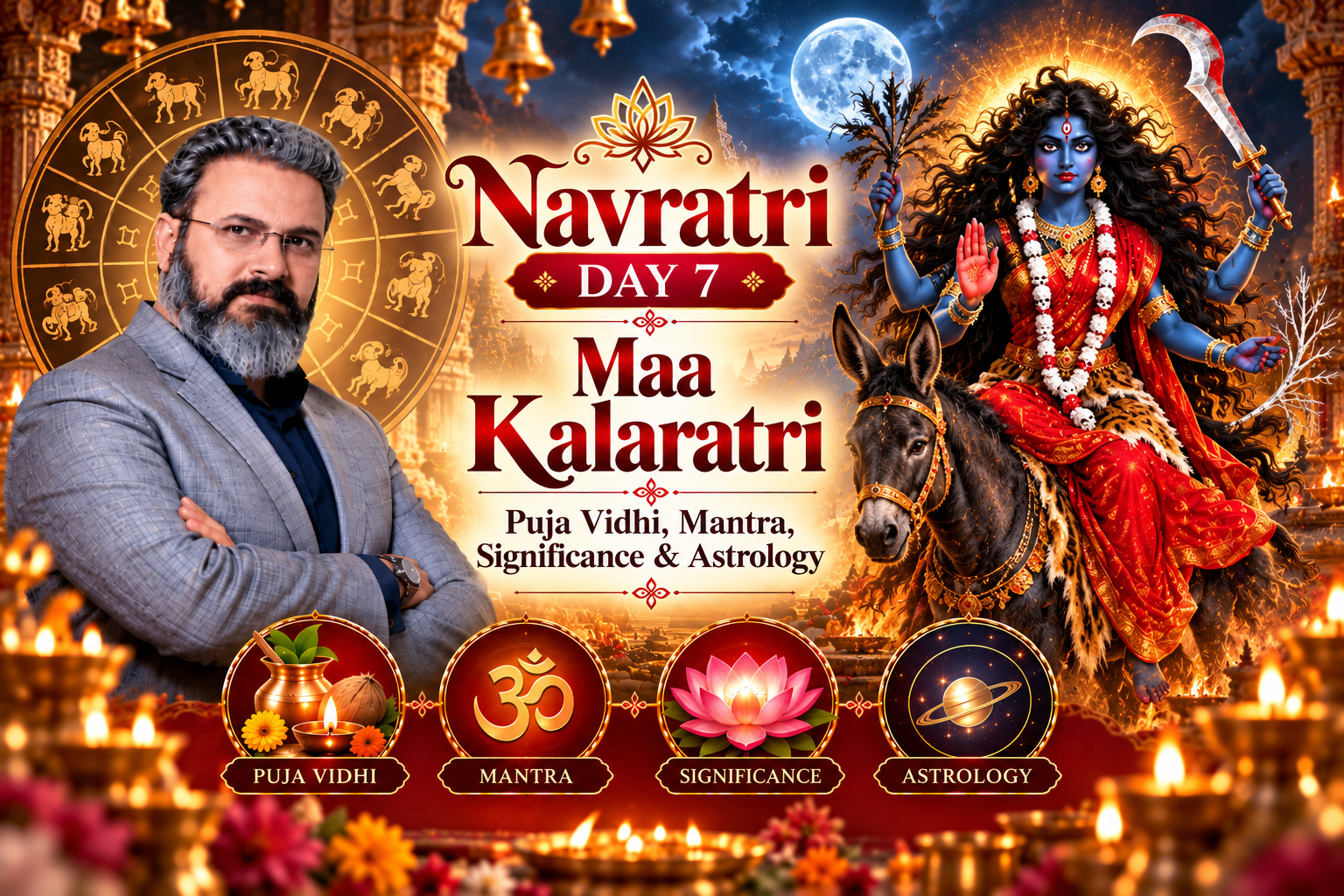
Navratri Day 7 Maa Kalaratri celebrates the seventh divine form of Goddess Durga. After worshipping Maa Katyayani on the sixth day, devotees honour Maa Kalaratri on the Seventh Day of Navratri, also known as Maha Saptami.
Maa Kalaratri represents fearlessness, divine protection, courage and the destruction of darkness and negativity. Although her appearance is fierce, she is revered as a compassionate Goddess who protects devotees from harmful forces.
The name Kalaratri combines two Sanskrit words: “Kala,” associated with time or darkness, and “Ratri,” meaning night. Her divine form symbolises the power that destroys ignorance, fear and destructive influences.
Maa Kalaratri is also known as Shubhankari, meaning the one who brings auspiciousness.
During Navratri Day 7, devotees seek her blessings for courage, inner strength, spiritual protection and peace.
In this guide, we explore Maa Kalaratri Puja, Kalaratri Mantra, Maa Kalaratri Significance, her divine story, spiritual teachings and the astrological significance of Maa Kalaratri.
Who Is Maa Kalaratri?
Maa Kalaratri is the seventh manifestation among the Nine Forms of Maa Durga, collectively known as Navadurga.
She is traditionally depicted with a dark complexion, flowing hair and a powerful appearance.
Maa Kalaratri has four arms. In traditional iconography, she carries a sword and an iron hook or weapon, while her other hands are shown in gestures of protection and blessing.
Her vehicle is a donkey, which symbolises humility, endurance and the ability to overcome difficult circumstances.
Her fierce appearance represents the destruction of negative forces, while her blessing gestures communicate compassion and protection.
The deeper Maa Kalaratri Significance lies in understanding that the removal of fear and ignorance is an important part of spiritual growth.
The Divine Story of Maa Kalaratri
According to Hindu devotional traditions, Maa Kalaratri is associated with the fierce protective power of Goddess Durga.
Popular Navadurga narratives connect her with the destruction of destructive demonic forces that threaten cosmic harmony.
One well-known tradition associates fierce forms of the Goddess with the battle against Raktabija.
Raktabija possessed a remarkable power: whenever a drop of his blood touched the ground, another demon could emerge.
In the Devi Mahatmya, Goddess Kali plays a crucial role in defeating Raktabija by preventing his blood from reaching the ground.
Although Maa Kalaratri and Kali are connected in some devotional interpretations, their identities and stories are presented differently across traditions.
The spiritual meaning of these narratives is the triumph of divine awareness over forces that multiply fear, confusion and destruction.
The story of Navratri Day 7 Maa Kalaratri teaches that difficult challenges must sometimes be confronted with courage rather than avoided.
Why Is Navratri Day 7 Maa Kalaratri Worshipped During Navratri?
The spiritual journey of Navratri progresses through nine divine forms of Goddess Durga.
Each form represents qualities that devotees can cultivate within themselves.
Day 1 represents stability through Maa Shailputri.
Day 2 represents discipline through Maa Brahmacharini.
Day 3 represents courage and peace through Maa Chandraghanta.
Day 4 represents creativity and positive energy through Maa Kushmanda.
Day 5 represents compassion and wisdom through Maa Skandamata.
Day 6 represents righteousness and determination through Maa Katyayani.
Day 7 represents fearlessness, spiritual protection and the removal of ignorance through Maa Kalaratri.
The Seventh Day of Navratri encourages devotees to face their fears, overcome destructive habits and develop spiritual resilience.
Maa Kalaratri teaches that genuine transformation often requires confronting the darkness within ourselves.
Spiritual Meaning of Maa Kalaratri
The spiritual significance of Maa Kalaratri is closely associated with fearlessness, protection, transformation and inner strength.
Her divine form teaches four important spiritual lessons.
Fearlessness: Develop the courage to face uncertainty and difficult circumstances.
Protection: Recognise the importance of protecting yourself and others from harmful behaviour.
Transformation: Release destructive habits and negative patterns that limit personal growth.
Wisdom: Replace ignorance and confusion with awareness and thoughtful action.
These teachings make Navratri Day 7 Maa Kalaratri meaningful for individuals experiencing uncertainty, emotional challenges or major life changes.
Her divine form reminds devotees that darkness is not always something to fear. It can also represent the beginning of transformation.
Maa Kalaratri and the Sahasrara Chakra
In some interpretations of the Navadurga spiritual journey, Maa Kalaratri is associated with the Sahasrara Chakra, also known as the Crown Chakra.
The Sahasrara Chakra is traditionally connected with higher consciousness, spiritual awareness and the experience of unity.
This spiritual association complements Maa Kalaratri’s symbolism of overcoming ignorance and fear.
Her fierce appearance represents the destruction of limiting beliefs, while her protective nature reflects the possibility of spiritual liberation.
During Navratri Day 7, devotees may reflect on how fear, attachment and negative thinking influence their lives.
The deeper lesson is that spiritual awareness grows when individuals begin to recognise and move beyond these limitations.
Chakra associations can differ between spiritual traditions.
Maa Kalaratri Puja Vidhi
Devotees can perform Maa Kalaratri Puja on the seventh day of Navratri with sincerity and devotion.
A simple traditional worship sequence may include:
Wake up early, bathe and wear clean clothes.
Clean and prepare the worship area.
Place an image or representation of Maa Kalaratri in the puja space.
Light a diya and incense.
Offer flowers, fruits and other traditional offerings according to family customs.
Jaggery is offered to Maa Kalaratri in some devotional traditions.
Recite the Kalaratri Mantra with concentration.
Perform aarti and pray for courage, wisdom and spiritual protection.
The exact Maa Kalaratri Puja Vidhi for Navratri Day 7 may vary according to regional and family customs.
Devotion, sincerity and peaceful intention remain central to worship.
Maa Kalaratri Mantra
A commonly recited Kalaratri Mantra is:
ॐ देवी कालरात्र्यै नमः॥
Om Devi Kalaratryai Namah॥
Devotees chant this mantra during Navratri Day 7 Maa Kalaratri worship to honour the Goddess and seek her blessings.
Another traditional prayer associated with Maa Kalaratri is:
एकवेणी जपाकर्णपूरा नग्ना खरास्थिता।
लम्बोष्ठी कर्णिकाकर्णी तैलाभ्यक्तशरीरिणी॥
This verse describes aspects of Maa Kalaratri’s fierce divine appearance.
Mantra chanting is traditionally practised as an expression of devotion and may also encourage concentration, calmness and spiritual reflection.
Maa Kalaratri Mantra and Benefits
The spiritual practice of chanting the Maa Kalaratri Mantra is traditionally associated with cultivating qualities such as:
Courage and fearlessness
Inner strength
Spiritual determination
Patience and self-control
Devotion and concentration
Emotional resilience
Confidence during difficult situations
A sense of spiritual protection
The Maa Kalaratri Mantra Benefits are understood within devotional traditions rather than as guaranteed physical, financial or personal outcomes.
The deeper purpose of mantra practice is to strengthen faith, awareness and spiritual discipline.
Maa Kalaratri and Astrology
The astrological significance of Maa Kalaratri provides another perspective on the seventh day of Navratri.
In some Navadurga astrological traditions, Maa Kalaratri is associated with Saturn, also known as Shani.
In Vedic astrology, Saturn is traditionally connected with discipline, responsibility, patience, karma, limitations and long-term effort.
This symbolic association complements Maa Kalaratri’s qualities of fearlessness, endurance and transformation.
Just as Saturn is associated with confronting responsibilities and limitations, Maa Kalaratri symbolically represents the courage to face difficult realities.
From this perspective, Kalaratri Astrology encourages individuals to develop patience, responsibility and resilience.
However, planetary associations with Navadurga vary across traditions and should not be treated as universal astrological rules.
Maa Kalaratri and Saturn in Vedic Astrology
Saturn, or Shani, holds an important position in Vedic Astrology.
It is traditionally associated with discipline, responsibility, perseverance, delays, maturity and the consequences of one’s actions.
Its interpretation in an individual’s birth chart depends on planetary placement, house ownership, aspects, planetary periods and other astrological factors.
The symbolic connection between Maa Kalaratri and Saturn in Vedic Astrology highlights the importance of patience and responsible action during difficult periods.
During Navratri Day 7, devotees may reflect on questions such as:
Am I avoiding responsibilities because of fear?
Do I remain patient when results take longer than expected?
Am I learning from difficult experiences?
Can I replace negative habits with disciplined action?
These questions can help transform Navratri into an opportunity for personal reflection and spiritual development.
For individual astrological concerns, the complete birth chart should be considered rather than relying on general planetary associations.
Maa Kalaratri and Protection from Negative Energy
Many devotees associate Maa Kalaratri Puja with protection from negative energy and harmful influences.
Within Hindu devotional traditions, the Goddess is revered as a powerful protector who removes fear and destroys destructive forces.
The spiritual meaning of this protection can also be understood through everyday life.
Negative influences may include harmful habits, destructive relationships, persistent anger, dishonesty or fear-based decisions.
Maa Kalaratri’s teachings encourage devotees to recognise these patterns and respond with awareness, courage and responsibility.
Worship can provide a meaningful source of spiritual comfort, but it should not replace practical steps to address personal safety, health or other real-world concerns.
What Does Maa Kalaratri Teach Us About Modern Life?
Modern life often brings uncertainty, emotional pressure, competition and unexpected challenges.
People may experience difficulties in their careers, relationships, finances or personal development.
Maa Kalaratri teaches that fear should not determine our actions.
Her divine form encourages devotees to develop the strength to confront difficult circumstances rather than avoid them.
In professional life, this can mean taking responsibility for mistakes and learning from setbacks.
In relationships, it can mean establishing healthy boundaries and addressing harmful behaviour.
In personal development, it can mean overcoming self-doubt and developing greater emotional resilience.
The message of Navratri Day 7 Maa Kalaratri is especially relevant today because meaningful transformation often begins when we face uncomfortable truths.
How to Follow Maa Kalaratri’s Teachings During Navratri
The teachings of Maa Kalaratri can be incorporated into everyday life through simple spiritual practices.
During the Seventh Day of Navratri, consider focusing on the following actions:
Begin your morning with prayer or meditation.
Identify one fear that is limiting your personal growth.
Reflect on habits that may be negatively affecting your life.
Practise patience during difficult circumstances.
Take responsibility for an unresolved problem.
Avoid unnecessary anger and harmful communication.
Offer support to someone facing difficulties.
Strengthen your commitment to honesty and discipline.
These practices reflect the deeper meaning of Maa Kalaratri Puja—cultivating courage, awareness and spiritual strength.
Navratri Day 7: The Power of Fearlessness and Transformation
Navratri Day 7 Maa Kalaratri represents an important stage in the nine-day spiritual journey.
After developing stability, discipline, courage, positive energy, compassion and righteousness through the first six forms of Navadurga, devotees are encouraged to cultivate fearlessness through Maa Kalaratri.
Her divine form reminds us that genuine transformation requires the courage to confront fear, ignorance and destructive habits.
Through Maa Kalaratri Puja, mantra chanting, meditation and self-reflection, devotees can use the seventh day of Navratri to strengthen their determination, emotional resilience and spiritual awareness.
Frequently Asked Questions
1. Which Goddess is worshipped on Navratri Day 7?
Maa Kalaratri is worshipped on the Seventh Day of Navratri. She is the seventh form of Navadurga and represents fearlessness, divine protection and the destruction of negativity.
2. What is the Maa Kalaratri Mantra?
A commonly recited Kalaratri Mantra is “Om Devi Kalaratryai Namah.” Devotees chant it during Navratri Day 7 Maa Kalaratri worship.
3. What is the significance of Maa Kalaratri?
Maa Kalaratri Significance is associated with courage, protection, transformation and the removal of ignorance. Her fierce appearance represents the destruction of harmful forces.
4. Which planet is associated with Maa Kalaratri?
In some Navadurga astrological traditions, Maa Kalaratri is associated with Saturn or Shani. In Kalaratri Astrology, this connection symbolically represents discipline, patience, responsibility and resilience.
5. What are the benefits of worshipping Maa Kalaratri?
Maa Kalaratri Puja and mantra chanting are traditionally associated with cultivating courage, spiritual strength, patience, determination and a sense of divine protection.
Conclusion
The seventh day of Navratri celebrates the divine qualities of fearlessness, protection and spiritual transformation.
Navratri Day 7 Maa Kalaratri reminds us that true courage is not the absence of fear but the willingness to face difficult circumstances with wisdom and determination.
Through Maa Kalaratri Puja, the Kalaratri Mantra, meditation and spiritual reflection, devotees can develop greater patience, resilience and inner awareness.
Her teachings encourage us to confront negative habits, accept responsibility and continue moving toward spiritual growth.
May Maa Kalaratri bless devotees with courage, wisdom, protection and inner peace throughout the sacred journey of Navratri.
Guru Ji Dr Raj – Mystic Guru | Vedic Astrologer
For deeper insights into Vedic Astrology, spirituality, Navratri and traditional wisdom, explore more guidance from Guru Ji Dr Raj at raj.guru