
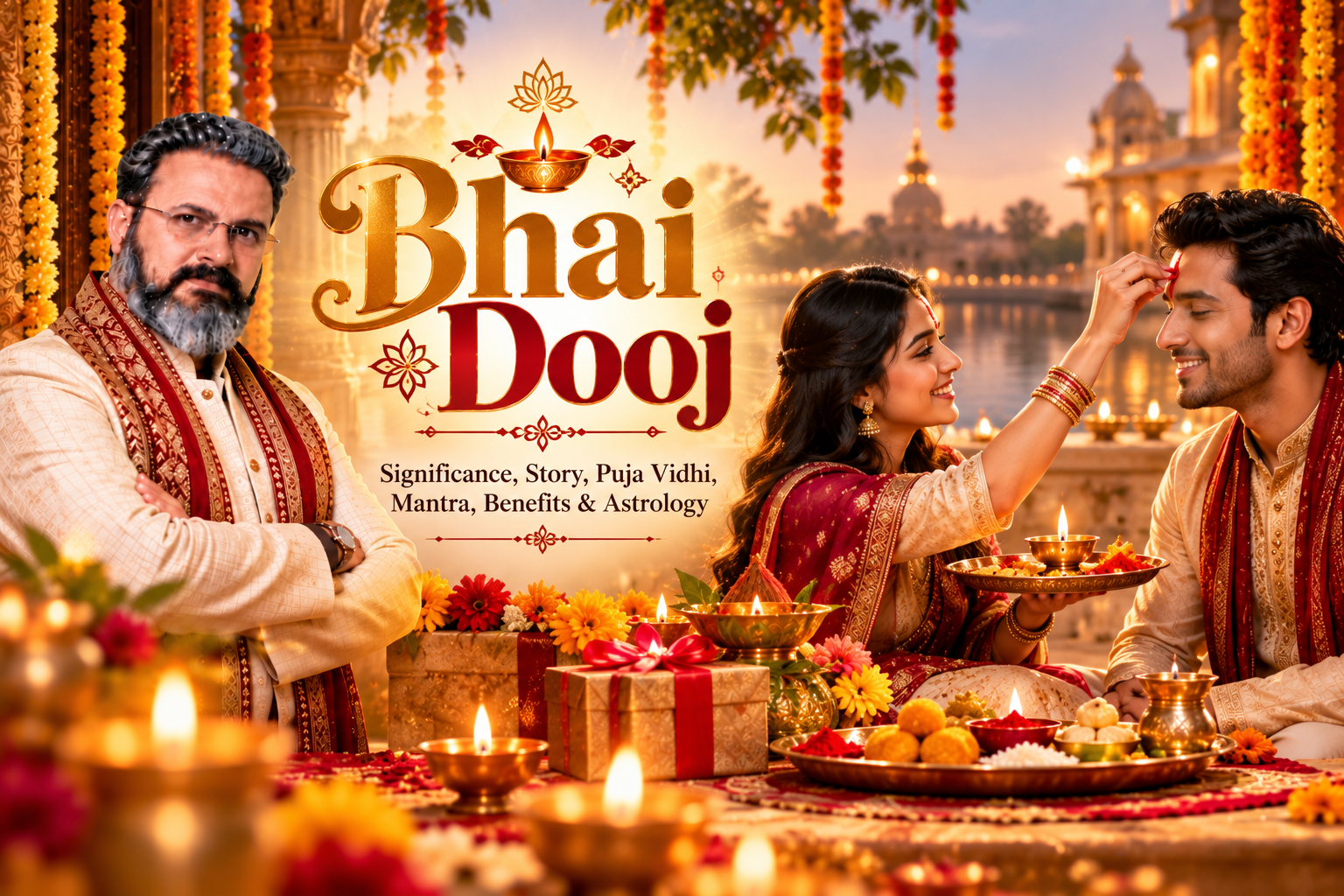
Bhai Dooj 2026: Date, Shubh Muhurat, Tilak Vidhi, Katha & Spiritual Significance Explained by Guru JI Dr Raj
Bhai Dooj 2026 will be celebrated on Wednesday, November 11, 2026. This beautiful Hindu festival celebrates the special relationship between brothers and sisters, symbolising love, protection, respect, and family unity.
Also known as Bhai Tika, Bhau Beej, Bhai Phota, and Yama Dwitiya, the festival is celebrated in different parts of India and Nepal with unique regional traditions.
On this occasion, sisters traditionally apply tilak to their brothers’ foreheads, perform aarti, offer sweets, and pray for their happiness and long lives.
Brothers express their love through gifts, blessings, and a promise of lifelong support.
But what is the story behind Bhai Dooj? Why is Yamraj worshipped? And what is the correct Bhai Dooj Tilak Muhurat 2026?
Let’s explore the festival’s date, timings, rituals, mythology, spiritual meaning, and traditional practices.
When Is Bhai Dooj 2026? Date and Shubh Muhurat
Bhai Dooj 2026 falls on Wednesday, November 11, 2026.
The festival is traditionally celebrated on Kartik Shukla Dwitiya, the second lunar day of the bright fortnight following Diwali.
Bhai Dooj 2026 Tilak Timings
Bhai Dooj Date: November 11, 2026
Day: Wednesday
Dwitiya Tithi Begins: November 10, 2026, at 2:00 PM
Dwitiya Tithi Ends: November 11, 2026, at 3:53 PM
Bhai Dooj Aparahna Tilak Muhurat: 1:10 PM to 3:20 PM
All timings are in Indian Standard Time and apply to New Delhi. Check your local Panchang for timings in other cities.
Why Is Bhai Dooj Celebrated?
Bhai Dooj honours the relationship between brothers and sisters.
The festival is associated with the traditional story of Lord Yama, the deity of death, and his sister Goddess Yamuna.
According to Hindu mythology, Yamuna wished for her brother to visit her home.
When Lord Yama finally arrived, she welcomed him warmly, performed a tilak ceremony, and prepared a special meal.
Pleased by her affection, Lord Yama offered her a boon.
Yamuna requested blessings for brothers who receive their sisters’ loving hospitality and prayers on this sacred occasion.
This traditional story explains why Bhai Dooj is also called Yama Dwitiya.
The festival represents affection, family responsibilities, gratitude, and the importance of maintaining strong relationships.
Bhai Dooj Katha: The Story of Yamraj and Yamuna
The Bhai Dooj Katha is one of the most important traditional stories associated with the festival.
According to Hindu belief, Lord Yama and Goddess Yamuna were brother and sister.
Yamuna loved her brother deeply and frequently invited him to visit her home.
Because of his duties, Lord Yama could not visit for a long time.
One day, he finally accepted her invitation.
Yamuna was delighted.
She welcomed her brother with traditional rituals, applied tilak to his forehead, and offered him a lovingly prepared meal.
Lord Yama was deeply moved by her devotion.
He offered to fulfil a wish.
Instead of asking for wealth or personal comfort, Yamuna prayed for the well-being of brothers everywhere.
According to tradition, Lord Yama blessed the occasion, which became associated with prayers for a brother’s long life and protection.
This story teaches an important lesson.
Love becomes more meaningful when expressed through kindness, respect, and sincere care.
Even today, the festival continues to bring families together.
Bhai Dooj Puja Vidhi 2026: Step-by-Step Tilak Ceremony
The Bhai Dooj Puja Vidhi is generally simple and focused on family blessings.
Customs may vary according to regional and household traditions.
Step 1: Clean and Decorate the Puja Area
Prepare a clean space for the ceremony.
Decorate with flowers, rangoli, or traditional festive decorations.
Step 2: Prepare the Bhai Dooj Puja Thali
Common items include:
Roli or kumkum
Akshat or uncooked rice
Diya
Flowers
Sweets
Coconut, where customary
Water
Aarti plate
Gifts for the brother or sister
Step 3: Invite Your Brother for the Ceremony
Traditionally, the sister welcomes her brother and offers him a seat.
The ceremony is usually performed during the auspicious Aparahna period.
Step 4: Apply Tilak
The sister applies roli or kumkum tilak to her brother’s forehead.
Rice grains may be placed over the tilak according to family customs.
This ritual symbolises blessings and affection.
Step 5: Perform Aarti
A diya is lit, and the sister performs aarti.
She prays for her brother’s health, happiness, protection, and long life.
Step 6: Offer Sweets
After the tilak ceremony, sweets or a traditional meal are offered.
Sharing food represents love and togetherness.
Step 7: Exchange Gifts and Blessings
The brother may offer a gift as a token of affection.
More importantly, both siblings express gratitude, respect, and emotional support.
The meaning of Bhai Dooj lies in the relationship, not the price of the gift.
Why Is Tilak Important on Bhai Dooj?
The Bhai Dooj Tilak Ceremony is the central ritual of the festival.
In Hindu traditions, tilak is commonly associated with blessings, respect, and auspicious intentions.
During Bhai Dooj, it becomes a symbol of a sister’s affection and prayers.
The ceremony also provides an opportunity for brothers and sisters to renew their family bonds.
Although traditional stories emphasise the relationship between a brother and sister, the festival can also inspire kindness and care among family members in different circumstances.
For siblings living far apart, a video call or personal message can still make the day meaningful.
Bhai Dooj 2026 Mantra and Traditional Prayers
Mantra chanting may accompany the tilak ceremony.
Because Bhai Dooj is associated with Yama Dwitiya, some devotees offer prayers to Lord Yama.
A simple devotional invocation is:
ॐ यमाय नमः।
Om Yamaya Namah.
This mantra expresses reverence toward Lord Yama.
Some families also pray to Goddess Yamuna.
ॐ यमुनायै नमः।
Om Yamunayai Namah.
These are simple devotional invocations. Regional prayer traditions may use different verses.
The main purpose of the ceremony is sincere prayer for well-being and family harmony.
Bhai Dooj and Vedic Astrology: Spiritual Meaning
In traditional Vedic astrology, family relationships and emotional connections are examined through different elements of a birth chart.
The third house is commonly associated with younger siblings, communication, and courage.
The eleventh house may be considered in relation to elder siblings, gains, and social connections.
Mars is traditionally linked with siblings and courage in several astrological interpretations.
The Moon is associated with emotions, care, and the mind.
These symbolic associations may provide a traditional perspective on family relationships.
However, Bhai Dooj astrology remedies cannot guarantee protection or determine the quality of a sibling relationship.
A complete Kundli requires individual interpretation, and strong relationships depend on trust, communication, kindness, and mutual effort.
Guru Ji Dr Raj shares insights into Vedic astrology and the importance of understanding personal responsibilities alongside spiritual beliefs.
Traditional Bhai Dooj Remedies and Spiritual Practices
Bhai Dooj encourages simple actions that strengthen emotional and spiritual connections.
1. Pray for Family Well-Being
Offer sincere prayers for the health, happiness, and peace of loved ones.
2. Resolve Old Misunderstandings
The festival is an opportunity to communicate respectfully and improve strained relationships when appropriate.
3. Offer Food and Charity
Providing meals or essential items to people in need reflects generosity and compassion.
4. Express Gratitude
Thank your siblings for the care, advice, and encouragement they provide.
5. Spend Meaningful Time Together
A shared meal, conversation, or thoughtful message can strengthen family relationships.
These practices support emotional and spiritual reflection, rather than guaranteeing particular outcomes.
How Is Bhai Dooj Celebrated Across India?
Bhai Dooj is known by different names and celebrated through varied customs.
Bhai Dooj in North India
Sisters traditionally perform tilak, aarti, and prayers for their brothers.
Bhau Beej in Maharashtra
The festival celebrates sibling affection through traditional rituals, sweets, and family gatherings.
Bhai Phota in West Bengal
Sisters apply a ceremonial mark and pray for their brothers’ well-being, often following regional customs.
Bhai Tika in Nepal
Bhai Tika is an important part of Tihar celebrations. It includes distinctive tilak traditions, garlands, and prayers for siblings.
These traditions show how the same festival can be celebrated in many meaningful ways.
Important Bhai Dooj Do’s and Don’ts
Do’s
Check the local Bhai Dooj Tilak Muhurat.
Prepare a clean puja thali.
Offer sincere blessings.
Spend meaningful time with siblings.
Respect different family traditions.
Don’ts
Do not treat expensive gifts as necessary.
Avoid unnecessary arguments.
Do not pressure anyone to participate in a ritual.
Avoid making unrealistic promises about health or longevity.
Do not let distance prevent you from expressing affection.
Frequently Asked Questions About Bhai Dooj 2026
1. When is Bhai Dooj in 2026?
Bhai Dooj 2026 is on Wednesday, November 11, 2026, in India.
2. What is the Bhai Dooj Tilak Muhurat 2026?
For New Delhi, the Aparahna Tilak Muhurat is 1:10 PM to 3:20 PM IST.
3. Why is Bhai Dooj celebrated?
Bhai Dooj celebrates sibling love and is associated with the traditional story of Lord Yama and Goddess Yamuna.
4. Which deity is associated with Bhai Dooj?
Lord Yama and Goddess Yamuna are closely associated with Yama Dwitiya traditions.
5. What is the difference between Raksha Bandhan and Bhai Dooj?
Both festivals celebrate sibling relationships. Raksha Bandhan traditionally centres on tying a rakhi, while Bhai Dooj is associated with tilak, aarti, prayers, and a shared meal.
6. What items are needed for Bhai Dooj Puja?
Common items include kumkum, rice, diya, sweets, flowers, water, and a puja thali.
7. Can Bhai Dooj be celebrated when siblings live abroad?
Yes. Families may observe the occasion through prayers, messages, video calls, or celebrations on another convenient day.
Conclusion
Bhai Dooj 2026 is a celebration of love, trust, protection, and the beautiful relationship between brothers and sisters.
The traditional story of Yamraj and Yamuna reminds us that genuine affection is demonstrated through care, gratitude, and thoughtful actions.
Whether you perform Bhai Dooj Puja Vidhi, apply tilak, exchange gifts, or simply speak to a loved one, the festival offers an opportunity to strengthen family bonds.
Explore Vedic traditions, spiritual wisdom, and astrology insights with Guru Ji Dr Raj, Mystic Guru and Vedic Astrologer.
Visit raj.guru to discover more about Hindu festivals, Vedic wisdom, and traditional astrology.

