Chhath Puja 2026: Date, Arghya Timings, Puja Vidhi, Rituals and Spiritual Significance Explained by Guru Ji Dr Raj
Chhath Puja 2026 is one of the most sacred Hindu festivals dedicated to Surya Dev, the Sun God, and Chhathi Maiya. Celebrated with devotion, discipline and gratitude, this four-day festival holds special importance in Bihar, Jharkhand, eastern Uttar Pradesh and Nepal’s Terai region.
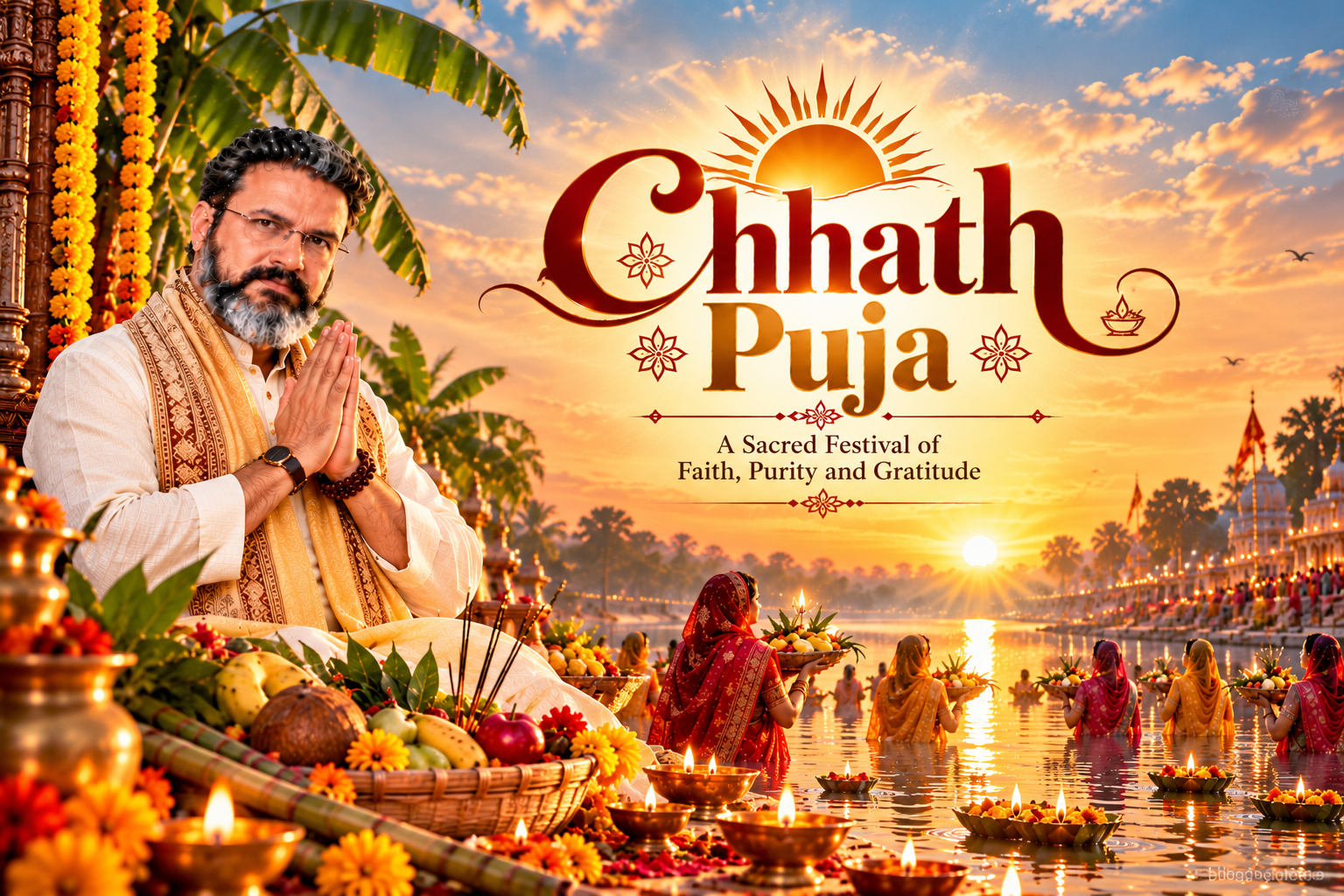
Families gather near rivers, ponds and other water bodies to offer prayers to the setting and rising Sun. Devotees prepare traditional prasad, observe fasting according to their customs and seek blessings for family happiness, well-being and prosperity.
Unlike many festivals, Chhath Puja places particular emphasis on worshipping both the setting Sun and the rising Sun.
In this guide, discover the Chhath Puja 2026 Date, Nahay Khay, Kharna, Sandhya Arghya, Usha Arghya, Chhath Puja Vidhi, fasting traditions and spiritual significance.
When Is Chhath Puja 2026?
Chhath Puja 2026 will be celebrated from Friday, November 13, to Monday, November 16, 2026.
The main Chhath Puja festival falls on Sunday, November 15, 2026, when devotees offer Sandhya Arghya to the setting Sun.
The festival is traditionally observed during Kartik Shukla Shashthi, following Diwali.
Chhath Puja 2026 Four-Day Schedule
Day 1 – Nahay Khay 2026
Date: Friday, November 13, 2026
Day 2 – Kharna 2026
Date: Saturday, November 14, 2026
Day 3 – Sandhya Arghya 2026
Date: Sunday, November 15, 2026
New Delhi Sunset: Approximately 5:28 PM IST
Day 4 – Usha Arghya 2026
Date: Monday, November 16, 2026
New Delhi Sunrise: Approximately 6:44 AM IST
Note: These timings are for New Delhi. Sunrise, sunset and local observance timings differ by location. Consult your local Panchang before performing the rituals.
Why is Chhath Puja Celebrated?
The Chhath Puja Significance is deeply connected with gratitude toward nature, devotion and family well-being.
Surya Dev is traditionally worshipped as the divine source of light, energy and life.
Sunlight sustains agriculture, influences natural cycles and plays an essential role in life on Earth.
During Chhath Puja, devotees express gratitude to the Sun for these blessings.
Chhathi Maiya is revered as a protective divine mother associated in regional traditions with children, family happiness and well-being.
The festival also emphasizes simplicity, cleanliness, self-control and respect for nature.
Rather than focusing on elaborate decorations, Chhath Puja centers on sincere worship, carefully prepared offerings and community participation.
Chhath Puja 2026: Complete Four-Day Rituals
Day 1: Nahay Khay 2026 – November 13
The first day of Chhath Puja is known as Nahay Khay.
Devotees begin the festival by bathing, cleaning their homes and preparing for the days of worship.
A simple vegetarian meal is traditionally prepared using ingredients permitted by family customs.
Common dishes include rice, chana dal and bottle gourd preparations.
Special attention is given to kitchen cleanliness and food preparation.
The first day symbolizes purity, preparation and the beginning of spiritual discipline.
Day 2: Kharna 2026 – November 14
Kharna, also known as Lohanda, is observed on the second day.
Devotees traditionally observe a fast during the day and prepare offerings for the evening worship.
Common Kharna prasad includes jaggery kheer, roti and fruits.
After offering prayers, the vrat observer consumes prasad according to the family’s established tradition.
In many families, this is followed by the beginning of a demanding Nirjala fast, during which food and water are avoided until the final morning Arghya.
Because extended fasting without water can cause dehydration and other health complications, individuals with medical conditions, pregnant women, older adults and others at increased risk should seek medical guidance and avoid unsafe fasting practices.
Day 3: Sandhya Arghya 2026 – November 15
Sandhya Arghya is one of the most important rituals of Chhath Puja.
Devotees gather at rivers, ponds or designated Chhath Ghats before sunset.
Traditional offerings are placed in bamboo baskets and Soop.
These may include fruits, sugarcane, coconut, Thekua and other customary preparations.
As the Sun begins to set, devotees stand near or in the water where it is safe and offer Arghya to Surya Dev.
The ritual represents gratitude toward the setting Sun.
In traditional spiritual interpretations, it also reminds devotees to respect every stage of life, including periods of difficulty and change.
Day 4: Usha Arghya 2026 – November 16
The final day is dedicated to the rising Sun.
Devotees gather before sunrise and prepare offerings for Usha Arghya.
As the Sun rises, prayers and Arghya are offered with devotion.
After completing the prescribed rituals, devotees conclude their fast according to family tradition. This is known as Parana.
Prasad is then distributed among family members, friends and other devotees.
The final day symbolizes hope, gratitude, renewal and the beginning of a fresh chapter.
Chhath Puja Vidhi: How to Perform the Puja
Chhath Puja Vidhi varies according to regional and family traditions.
A general preparation process includes:
Clean the home and prayer area.
Prepare traditional vegetarian prasad using clean utensils.
Arrange offerings in bamboo baskets or Soop.
Gather at a safe, designated worship location.
Offer Sandhya Arghya to the setting Sun on November 15.
Return for Usha Arghya on the morning of November 16.
Complete prayers and distribute prasad after Parana.
Devotees should follow their family’s established customs and seek local guidance when necessary.
When visiting public Ghats, use designated safe areas and follow the instructions of local authorities.
Essential Chhath Puja Samagri
Common items used during Chhath Puja include:
Bamboo Soop and Daura
Coconut
Sugarcane
Bananas and seasonal fruits
Thekua
Rice and wheat flour
Jaggery
Clean water
Flowers
Traditional lamps
Other offerings according to family customs
The choice of ingredients may vary across communities.
Traditional offerings are usually prepared with attention to cleanliness and simplicity.
Thekua: Traditional Chhath Puja Prasad
Thekua is among the most recognizable foods associated with Chhath Puja.
It is traditionally prepared using wheat flour, jaggery or sugar, and ghee or oil.
Families may use traditional molds to create decorative patterns.
Thekua is prepared as prasad and shared with relatives, neighbors and devotees.
Its importance goes beyond food. The preparation often brings family members together and connects younger generations with inherited customs.
Chhath Puja Mantra for Surya Dev
Mantra chanting is a devotional part of Surya worship.
A commonly recited Surya mantra is:
ॐ सूर्याय नमः।
Om Suryaya Namah.
Another traditional mantra is:
ॐ घृणिः सूर्याय नमः।
Om Ghrini Suryaya Namah.
Devotees may chant these mantras with concentration and sincerity.
The purpose of mantra chanting is spiritual devotion. A particular number of repetitions should not be treated as a guarantee of health, wealth or other outcomes.
Chhath Puja and Vedic Astrology
In Vedic Astrology, the Sun is known as Surya and is associated with authority, vitality, confidence, leadership and the father.
The Sun is also traditionally connected with the Atmakaraka principle in certain interpretive contexts, although identifying an individual’s Atmakaraka requires a specific birth-chart calculation.
In a Kundli, the Sun’s sign, house, dignity and relationship with other planets are considered during interpretation.
Chhath Puja, however, is primarily a devotional festival. It should not be reduced to an astrological remedy or presented as a guaranteed solution to problems indicated in a horoscope.
Guru Ji Dr Raj shares guidance on Vedic astrology, traditional spiritual practices and the importance of understanding planetary influences within the complete birth chart.
Important Chhath Puja Do’s and Don’ts
Do’s
Maintain cleanliness during preparations.
Respect family and regional customs.
Use safe, designated Chhath Ghats.
Prepare offerings carefully.
Help elderly devotees and people requiring assistance.
Keep the worship area free from unnecessary waste.
Follow appropriate medical advice concerning fasting.
Don’ts
Do not leave waste or plastic near rivers.
Avoid overcrowded or unsafe water areas.
Do not attempt demanding fasting when medically unsafe.
Avoid wasting food and offerings.
Do not pressure anyone to participate in fasting.
Do not leave children unattended near water.
Respect for nature and community safety should remain central to the celebration.
Frequently Asked Questions About Chhath Puja 2026
1. When is Chhath Puja in 2026?
Chhath Puja will be observed from November 13 to November 16, 2026. The main Sandhya Arghya falls on Sunday, November 15.
2. What is the date of Nahay Khay 2026?
Nahay Khay will be observed on Friday, November 13, 2026.
3. When is Kharna 2026?
Kharna will take place on Saturday, November 14, 2026.
4. When is Sandhya Arghya 2026?
Sandhya Arghya will be offered on Sunday, November 15, 2026, around local sunset.
5. When is Usha Arghya 2026?
Usha Arghya will take place on Monday, November 16, 2026, around local sunrise.
6. Which God is worshipped during Chhath Puja?
Chhath Puja is dedicated primarily to Surya Dev and Chhathi Maiya.
7. What is the importance of Thekua?
Thekua is a traditional prasad prepared during Chhath Puja and shared after the worship rituals.
8. Why are both the rising and setting Sun worshipped?
Within traditional interpretation, worshipping both symbolizes gratitude, acceptance, renewal and respect for the different phases of life.
Conclusion
Chhath Puja 2026 is a festival of devotion, discipline, gratitude and respect for nature.
From Nahay Khay and Kharna to Sandhya Arghya and Usha Arghya, each ritual holds deep meaning for participating families.
The festival encourages simplicity, family unity, sincere worship and appreciation for the natural world.
Explore more about Vedic wisdom, Hindu festivals and traditional astrology with Guru Ji Dr Raj, Mystic Guru and Vedic Astrologer.
Visit raj.guru for more insights into Vedic astrology and Indian spiritual traditions.